Wednesday, 8 July 2020

Localized Dry Spot

Localized dry spots are brown and purple spots that appear out of no where and then once visible begin to show signs of drought stress. Many things can contribute to localized dry spot formation but some of those most common reasons include thatch, compacted soil, steep slopes, poor irrigation water quality, improper irrigation coverage, disease and high salt concentrations in soils. 
Localized dry spot present in bentgrass


The soil particles in these localized dry spot areas become hydrophobic (incapable of accepting/absorbing water and re-hydrating) because of an organic coating that becomes present on the soil particles. Localized dry spot has become a larger problem over the last 20-30 years as golf maintenance practices have changed. Previously golf courses used more water (saturating the surface more consistently) and did not prepare the playing surfaces as aggressively as we do now. Once the push came to use less water and to dry down the surface to produce much firmer and faster conditions, along with sand based construction becoming the norm the industry, we then saw localized dry spot become a more common issue. Excessive thatch can become hydrophobic as well which can lead to the water never getting into the soil because of the water droplets never being allowed to absorb below the surface due to the thatch layer. 

Aeration has been proven to help lessen the effects of localized dry spots. Aeration can help to relieve compaction in the soil that reduces water/air infiltration and it will also help to remove thatch that can prevent the water from entering the soil. Aeration will create channels in the soil that will most importantly allow water to enter the soil and enter deeper into the rootzone by the act of cultivating the surface. This will make overhead irrigation and hand watering practices more effective.

The most effective tool for dealing with localized dry spot is the use of wetting agents. Wetting agents help alter the soil to allow it to accept water and then allow for continual re-wetting of the rootzone. Wetting agents allow water to spread across the surface and penetrate into the soil by lowering the surface tension of the liquid. There are many different types of wetting agents available though so be sure to understand and choose the technology that fits your specific golf course and location needs. Are you simply just looking to rewet the soil that will not accept water where dry spots have occurred, are you looking to improve the efficiency of the water you apply to allow you to use less water, are you looking for a penetrant to move water through the profile, are you wanting a wetting agent to soften the surface or to firm up the surface, etc. All of these questions should be asked before choosing your wetting agent to allow the right product to be purchased from your supplier, so be sure to ask yourself and your supplier these questions to ensure you are using the best product for your needs!

Turf Fuel has many different wetting agent/surfactant options available for the consumer to choose from. Vanquish Plus contains three different polymers that aid in soil penetration, hydration and rehydration. Vanquish is the perfect treatment and recovery aid for dealing with localized dry spot and drought conditions. Vanquish will provide uniform hydration across the rootzone. 


Kraken Plus is a 30 day dry spot/drought preventative wetting agent. It contains capped polymers and is completed by a unique solvent technology. This product will provide unmatched tournament like, firm and fast, playing conditions. 


Distance Plus is a multiple branching polymer that is designed to provide long term (up to 120 day) protection against dry spot and drought conditions. This product is perfect for tee box, fairway, approaches, driving range and slope/traffic locations. 


Cleanse Plus is a solvent surfactant product that will improve water penetration and reduce hydrophobic organic materials that coat soil particles. By removing and reducing these organic materials this is the perfect clean-up product to reduce hydrophobic and localized dry spot conditions. 

Turf Fuel is committed to developing products that are not like any other on the market and finding solutions to the problems that have been plaguing turf managers for years. They are committed to always improving the already great products they currently have. Turf Fuel has solutions available from the most simple aspects of nitrogen nutrition to the much more complicated solutions that you have been looking for such as stress management. 

Thursday, 2 April 2020

Calcium for Turf

Calcium is without a doubt one of the most important nutrients for maintaining healthy turf but quite often is overlooked. Calcium is important for cell strength as it will help the plant in strengthening cell walls. It also maintains osmotic balance (balance between electrolytes and non-electrolytes through the movement of solution through cell walls) with cells which helps keep cell membranes stable. 

Because calcium is important for cell wall strength we can then make the connection that it is important in managing plant stresses as the thicker/stronger the cell wall is, the less likely it is to be compromised from the attack of a pathogen or external stress. Foliar calcium can be helpful in managing heat stress as it allows the plant to go through respiration without using up its carbohydrate supplies. Because of this the plant still has the energy to carry out its normal processes as it is not having to turn around and reproduce all of its new energy.


As many people do know calcium is very important for improving soil structure. We typically use it as a soil amendment in Saskatchewan for dealing with high levels of sodium which we see as a large problem throughout the entire province. Calcium works by entering the soil and replacing sodium from soil particles. Once the sodium is no longer linked to the soil particles we have the opportunity to attempt to leach the sodium through the soil profile. The removal of the sodium from the soil is very important as we end up with a soil profile that is no longer so tightly bound where there is now pore/air space the allow air, water, nutrients, etc to move through the soil more freely. This is why when we have sodium effected soils that you see and feel that the soil becomes hard like cement and that water struggles to enter these soils (puddling) because the soil is so tight that the water can not enter the soil. Calcium can displace other cations so easily within the soil because it is a much larger cation in size so it can “out-weigh” other cations and it’s two positive charges can then easily  attach between different soil particles.

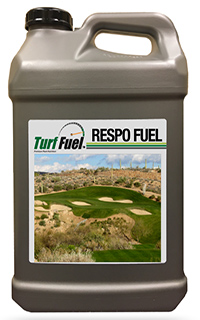
Turf Fuel has a few different calcium products available to help turf managers with the problems/solutions that we have discussed. Respo Fuel is a calcium-rich product that we use to mitigate heat stress. This product allows respiration to take place without the plant using up all of its energy. Respo Fuel also contains biostimulants, salicylic acid, Nutrifense, copper and silica resulting in the ultimate summer heat stress product. 


Lessen 11 is an acidified calcium product that physically removes sodium from soil particles. This then allows the sodium to be flushed through the rootzone by precipitation or irrigation. The acidic calcium in this product will also help to free up calcium that had previously been tied up in the soil as well.


D-Solve is a blend of acids and a soil penetrant that helps to dissolve bicarbonate layering. It does not contain calcium but because of this acidifying removal of sodium it frees up calcium and magnesium that had previously been tied up in the soil so you then can receive many of the benefits that calcium provides to the plant from what was already in your soil.


Turf Fuel is committed to developing products that are not like any other on the market and finding solutions to the problems that have been plaguing turf managers for years. They are committed to always improving the already great products they currently have. Turf Fuel has solutions available from the most simple aspects of nitrogen nutrition to the much more complicated solutions that you have been looking for such as stress management. 


Sunday, 10 November 2019

Sea Kelp

Different forms of sea kelp are now very commonly being used in turf management for their numerous benefits. Sea kelp is very mineral rich and provides the plant with two major growth hormones. These two hormones are cytokinins and auxins. These nutrients are very effective in helping the plant to manage and recover from drought and heat stress. 


Kelp increases carbohydrate production which in turn enhances root and leaf production. Sea kelp will increase soil microbial activity; when this activity increases we will see more nutrients become available to the plant that may have previously been tied up by the soil and then because of this we will also see an increase in nutrient uptake with the plant. Kelp has been proven to also increase photosynthesis and chlorophyll production which will give the plant a major aesthetic boost. Sea kelp can also be very valuable and helpful with grow-ins and establishment as they will speed plant establishment/germination and increase new seedling development. 


The extra micronutrients provided by sea kelp have proven to be very effective in helping the plant to resist attack and infection from disease and insect pests. There has been research done with sea kelp applications in turf that has shown an increase in water holding abilities in the soil which is a great added benefit for a turf manager. 

Sea kelp products are readily available on the market now and as a turf manager it will be very easy for you to get your hands on them if you are not already using kelp products. Many liquid nutritional products and blended with kelp in them now but there are also products available that only contain kelp as well. 

Turf Fuel has many products available that contain sea kelp. Our sea kelp is Ecklonia maxima which is an auxin rich form of sea kelp. Our auxin rich formula will be the most effective in increasing root mass and system development while limiting the growth of lateral stems which is not desirable in turf.

XChange is a combination of sea kelp, humic acid, salicylic acid and iron. This product will greatly improve nutrient availability. XChange will also greatly increase root mass, antioxidant levels and colour. It will also help the plant to manage stress and disease.
 

Respo Fuel contains sea kelp, foliar calcium, silica, copper, salicylic acid and our Nutrifense technology. It is a fantastic product for managing and preventing heat and drought stress.


Turf Fuel is committed to developing products that are not like any other on the market and finding solutions to the problems that have been plaguing turf managers for years. They are committed to always improving the already great products they currently have. Turf Fuel has solutions available from the most simple aspects of nitrogen nutrition to the much more complicated solutions that you have been looking for such as stress management. 

Sunday, 1 September 2019

Potassium Nutrition

Potassium has many important roles in aiding in overall plant health. Of the three primary plant nutrients (nitrogen, phosphorus and potassium), potassium is the nutrient that is most important in helping the health of the plant to be protected against environmental stresses such as drought and extreme winter weather. Potassium is very important for many crucial plant process which include the synthesis/production of starches and essential sugars. Potassium is also known to aid the plant in being more resilient to external stresses as it is very effective in strengthening plant cell walls. Potassium has also been proven to help the plant with increasing disease and drought resistance along with what most people think of when they think of potassium which is increasing overall plant hardiness heading into and over the winter period. 


Because potassium is important for cell strength and internal cell functions; when it is supplied to the plant in adequate amounts the plant will then be more efficient with photosynthesis, water absorption, the creation of proteins and respiration. This statement really helps to explain why it is so useful in managing stress. Typically when the plant is under stress the necessary processes will slow down, but when we supply potassium to the plant it enables the plant to be able to continue with these necessary processes even when an external stress is present because the plant is strong enough to fight against the stress on its own. 

Potassium can aid the plant in being able to easier and more efficiently take up water and nutrients. Because potassium is very important in enabling the plant to grow; if it becomes deficient it can lead the plant to grow or recover slower than desired. The plant is primarily focused on storing carbohydrates in the fall in preparation for it "hibernation" period. By adding potassium at that time of year you are helping the plant to better store the food it needs to survive the winter. 

Turf that is deficient in potassium will have a yellow appearance and will begin to have a weaker root system which will lead to a weakened stand of turf that is easily susceptible to damage. One very important point with potassium is that it is a very Saskatchewan nutrient. A good portion of the world potash supply comes from our province so it is great to know that potassium is not only great for our turf but also our province!

Turf Fuel has a few foliar products and many granular products that contain sources of potassium. The main potassium product is Base K26. Base K26 is a 0-0-26 potassium fertilizer made from a very safe highly absorbed form known as potassium acetate. This product also contains G2D (Grow to Defend) technology. The technology is a blend of conjugated (combined), plant based hormones. G2D primes the plants growth and development while still improving plant structures like shoots and chlorophyll production, promotes energy conservation because these effective hormones have been supplied and helps the plant use nutrients more efficiently.


Turf Fuel is committed to developing products that are not like any other on the market and finding solutions to the problems that have been plaguing turf managers for years. They are committed to always improving the already great products they currently have. Turf Fuel has solutions available from the most simple aspects of nitrogen nutrition to the much more complicated solutions that you have been looking for such as stress management. 
Sunday, 4 August 2019

Fungicides and Snow Mould

Snow moulds are most definitely the one type of disease that all turf managers in the province of Saskatchewan can and do face regardless of their location in the province. Because of this and the level of destruction they can cause to your turf it is fully accepted that we will preventatively spray fungicides to our turf to avoid the occurrence or lessen the damage from the disease.

During the winter the turf becomes weaker as the amount of carbohydrates within the plant becomes less and less. Snow moulds are among those disease types that are active and actually thrive under cooler temperatures and because of that they are the perfect opportunists when the turf is weaker to attack. The leaves of the plant will appear sunken and usually be coated in white mycelia after the pathogen has infected the plant. 
Photo by William M. Brown Jr., Bugwood.org.


There are extra steps that we can take to help in hardening the plant off in the fall along with not neglecting regular cultural practices which will lead to optimal plant health the can help to lessen the effects of snow mould but usually it is still necessary to apply fungicides to prevent snow moulds. The good news is that there are many different fungicides available that will work very well to control snow mould. 

There are many different types of fungi that cause snow moulds though so it is very important to know what type of snow mould you are trying to control when selecting fungicide products as some products will work better than others depending on which fungus is present. The two main diseases we deal with at snow mould time are grey snow mould and pink snow mould. Grey snow mould will typically have visible mycelia (white webbing) on top of the patch and the patches will be white or gray in colour. Pink snow mould will appear in similar sized patches and be pink to orange-brown in colour.

Different fungicide active ingredients will work and prevent the pathogen in different ways. Some will coat the plant tissue and prevent the pathogen from entering the plant, some fungicides will enter the plant foliage and spread throughout the leaf blade they were sprayed on and in that case prevent the disease from infecting the plant in the areas the active ingredient was sprayed on and some fungicides will enter the foliage and spread throughout the entire plant and in that case prevent the pathogen from infecting the plant structures it had spread to. The important factor with any of the active ingredients that do not just coat and remain on the plant tissue and instead move throughout the foliage is that you have to ensure that the plant is still actively growing (not dormant) enough for the product to be taken into the plant and then spread. Alternatively though, fungicide products that just coat the plant tissue will be less effective at times of aggressive plant growth and watering as the plant will grow out the active ingredient or the water will eventually wash it off in time. 

At Target Specialty Products we have many different fungicide products available to treat snow moulds and the different disease types related to snow mould. FMC has a product called Disarm that contains the active ingredient Fluoxastrobin. Disarm is a systemic product that is labelled for control of and very effective with both grey and pink snow mould. Disarm is usually one of the products we have customers use as one of their September "clean-up" applications.


Quali-Pro has a three-way active ingredient fungicide product called Intaglio that contains the active ingredients Chlorothalonil, Fludioxonil and Iprodione. Intaglio is a very effective product and it is labelled for control of both grey and pink snow mould. Intaglio is the fungicide product that we have our customers use as their final fungicide application right prior to winter.


Quali-Pro also has single active ingredient products called Chlorothalonil 720F, Iprodione 240 SE and Propiconazole 14.3 ME which are also very effective for pink and grey snow mould. Those three Quali-Pro products are products that we would recommend to customers for use in September as one of their "clean-up" applications or as a preventative application first thing in the spring right after snow melt. 


When used at the proper times in conjunction with strong plant health programs (fertility and cultural)Target Specialty Products fungicide products will be very effective in controlling all different types of snow moulds that exist. 


Monday, 1 July 2019

Manganese

Manganese is an often forgotten about but very important micronutrient for turf. Manganese plays an important role in the photosynthesis process as it is the element that splits H2O molecules early in the photosynthesis process. Manganese also is the element that breaks down carbon dioxide during the photosynthesis process. Because of this if the plant is deficient with manganese than it will have a negative effect on chloroplast and then in return reduce photosynthesis production. Once photosynthesis slows then so do most other plant functions and as a result we end up with a weaker plant. Most manganese that exists in the soil will not actually be available to the plant due to the fact that it normally oxidizes so quickly within the soil. Because of this manganese applied in foliar applications will generally be most effective depending on the main goal of the manganese application. 


Manganese has proven itself to be very effective in enabling the plant to be able to deal with some pathogen infections. Manganese is responsible for being a part of the activation process of many plant beneficial enzymes. Many of these enzymes are important for the production of lignin. Lignin is an important part of the plant tissue, especially the roots that helps the plant to be more resistant to soil-borne diseases. Manganese is also responsible for other enzymes that can also be toxic to certain pathogens as well which can help the plant deal with disease. 

Because manganese is so beneficial for oxygen production within the plant it is also great for stress resistance as most stresses will typically limit oxygen so in the case of manganese it will actually increase oxygen and the plants ability to handle the stress. Manganese deficiency will typically appear as discoloration or chlorosis within the veins of younger plant leaves. But in contrast to this; adequate amounts of manganese will result in great colour within the plant especially because it is so important for photosynthesis. 

Turf Fuel has a product called MZ-23 that is a manganese product along with zinc, potassium phosphite and seaweed extract. MZ-23 is the ultimate stress and summer stress product due to the stress and pathogen related benefits that manganese, phosphites and zinc all give you. It is also a great product for promoting rooting and a great colour response as well. 

We do also have many other foliar and granular products available though that will provide the plant with all of the benefits of manganese that we have discussed that can be a great addition to your program as well.

Turf Fuel is committed to developing products that are not like any other on the market and finding solutions to the problems that have been plaguing turf managers for years. They are committed to always improving the already great products they currently have. Turf Fuel has solutions available from the most simple aspects of nitrogen nutrition to the much more complicated solutions that you have been looking for such as stress management. 


Monday, 3 June 2019

Phosphites

Phosphites have become a popular and very common topic in the turf management world, but what exactly do they do for the turf? 

Phosphites are now commonly being used in the turf world for disease suppression, as plant defense activators that can strengthen the plant to enable it to fight in times of stress and as a biostimulant to strengthen the plant through root & shoot development, stress tolerance, etc. Because of phosphites ability to suppress disease and strengthen the plant to be capable of fighting off stress, phosphites are a very popular and important component of a managers integrated pest management program as there is more and more pressure to move away from or use less synthetic pesticides. Phosphites are generally less expensive than traditional fungicide products and will have less of a negative effect on harming non-target organisms when spraying.


Phosphites on their own have proven to reduce the incidence of disease in many cases by atleast 50% but have also shown that they can even have greater control than that. Research has proven that with the combination of both phosphites and traditional fungicides together that disease suppression is excellent and even better than the fungicides on their own. Because of this data it can give you as a turf manager a few options. When disease pressure is moderate to low the use of phosphites on their own may just be enough to control the disease within your thresholds. When disease pressure is high and phosphites and fungicides are used together you can expect very strong disease control or even the option to use a lower rate of fungicide without losing any of the expected control you would expect from fungicides alone at a higher rate. 

The addition of phosphites to turf will result in higher quality and more dense turf compared to areas where phosphites are not used. In trial data the plots with phosphites added were even able to show that the turf treated with phosphites were more dense and of better overall quality in comparison to the turf that received just fungicide applications. Trials have now been carried out to show that when phosphites are in contact with pathogen material that they will actually slow the development of the pathogen similar to a fungicide and then allow the plant to fight back against the disease.  

Turf Fuel carries two phosphite products called Phos-Sil Fuel Supreme and MZ-23. Phos-Sil Fuel Supreme is a combination of phosphite and silica. The phosphites will help to fight disease and enable plant defense mechanisms while the silica will harden cell walls and results in a tougher and more resilient plant. Phos-Sil Fuel is the ultimate plant stress and health product that will result in a very tough plant. 
   

MZ-23 is a combination of phosphite, sea kelp, potassium, manganese and zinc. This product combination will result in exceptional stress resistance, colour and turf health. It is great for driving roots but the combination of manganese and zinc are also great for in-season patch diseases and carrying out many of the plants most important jobs like photosynthesis.  


Turf Fuel is committed to developing products that are not like any other on the market and finding solutions to the problems that have been plaguing turf managers for years. They are committed to always improving the already great products they currently have. Turf Fuel has solutions available from the most simple aspects of nitrogen nutrition to the much more complicated solutions that you have been looking for such as stress management.